Discover the history of the Household Cavalry Life Guards, their traditions, uniforms, and how their story is presented at the museum.
The Life Guards are one of the two regiments that make up the modern Household Cavalry. Instantly recognisable in central London for their ceremonial duties at Horse Guards, they also form part of an operational British Army regiment with a history stretching back more than three centuries.
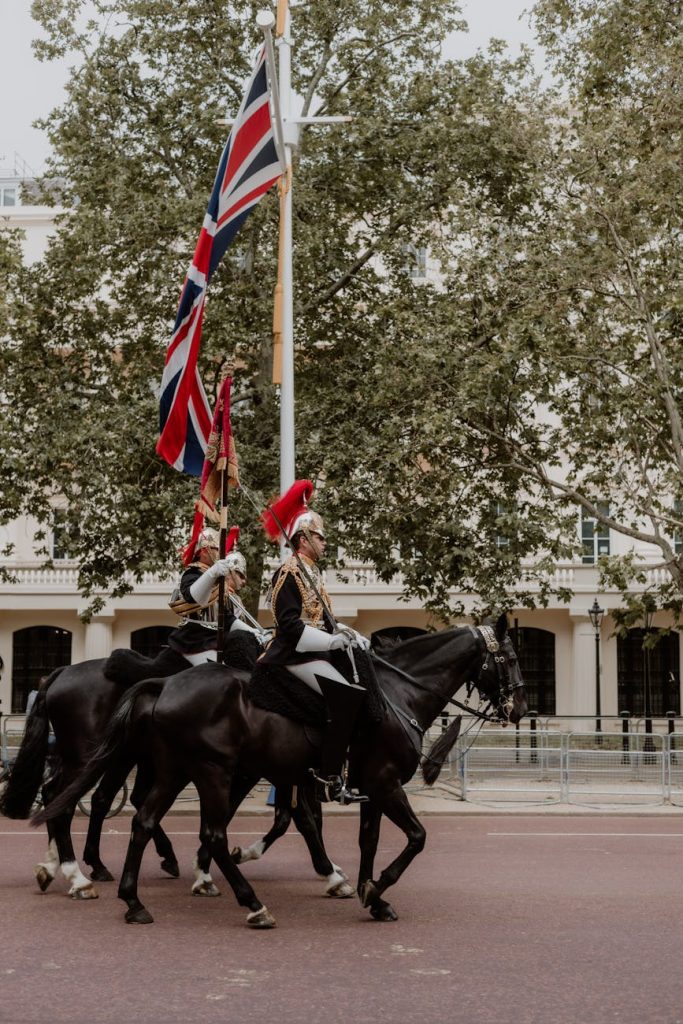
This page explains who the Life Guards are, how they fit within the Household Cavalry, and what visitors can discover about them at the Household Cavalry Museum.
If you are planning a visit, begin with Book Household Cavalry Museum Entry Tickets
Who are the Life Guards?
The Life Guards are one half of the Household Cavalry, alongside the Blues & Royals. Their origins lie in the personal bodyguards of the monarch, a role that developed during the 17th century and has continued, in different forms, ever since.
Today the Life Guards combine two responsibilities:
- Ceremonial duties in London, including mounted guard at Horse Guards and participation in major state occasions
- Operational military service as part of the British Army’s modern reconnaissance capability
An official overview of the regiment’s current role can be found on the British Army Household Cavalry page.
Life Guards and London ceremonial duty
For most visitors, the Life Guards are encountered on Horse Guards Parade in Whitehall. Mounted soldiers in full ceremonial dress stand guard daily, and they take part in formal events such as the Changing of the Guard.
If you want to see the regiment in action, the best starting point is the practical guide to the Household Cavalry Changing of the Guard.
To understand how these ceremonies fit within the wider traditions of the regiment, see Household Cavalry Parade and Band.
Recognising Life Guards uniforms
The Life Guards have distinctive ceremonial uniforms that help identify them quickly on parade. Details such as helmet plume colours, tunic styles, and regimental badges reflect long-established traditions.
A full explanation of these features is available in our guide to Household Cavalry uniforms, which highlights the differences between the Life Guards and the Blues & Royals.
The Life Guards beyond ceremony
Although they are best known to the public for mounted duties in London, the Life Guards are also a modern operational unit. Soldiers train for active military roles and have served on deployments around the world.
Training combines traditional horsemanship for ceremonial tasks with the professional skills required of a contemporary reconnaissance regiment. You can explore this aspect in more depth on the page about Household Cavalry training and duties.
What you can see at the museum
The Household Cavalry Museum brings the story of the Life Guards to life through:
- Historic uniforms and equipment linked specifically to the regiment
- Explanations of how ceremonial duties are organised
- Personal stories of soldiers who have served
- A viewing area into the working stables where mounted duties are prepared
Because the museum is part of a living military headquarters, visitors can connect what they see inside with real activity taking place just outside on Horse Guards Parade.
Planning your day around Horse Guards
Many visitors combine a museum visit with time on Horse Guards Parade and other nearby attractions such as Buckingham Palace and Westminster Abbey. Practical travel information for central London is available from Transport for London, and wider itinerary ideas can be found at Visit London.
For orientation and the best viewing points around Horse Guards, use the Horse Guards Parade visitor guide.
Frequently Asked Questions
Are the Life Guards a separate regiment from the Blues & Royals?
Yes. The Life Guards and the Blues & Royals are two distinct regiments that together form the Household Cavalry.
Can I see Life Guards soldiers at Horse Guards every day?
Yes. Mounted sentries from the Household Cavalry are on duty daily at Horse Guards, making it one of the most reliable places in London to see ceremonial duty in action.
Do the Life Guards only perform ceremonial roles?
No. In addition to ceremonial duties, Life Guards soldiers train and serve in operational military roles as part of the modern British Army.
What Life Guards items are displayed in the museum?
The museum includes uniforms, helmets, equipment, and historic objects connected with the Life Guards, along with explanations of their traditions and duties.
Is it possible to photograph Life Guards on duty?
Photography from public areas around Horse Guards Parade is generally allowed, but visitors should remain respectful and avoid interfering with soldiers or horses.
How does the museum help explain the Life Guards’ history?
Exhibitions provide background on the regiment’s origins, its development over centuries, and how those traditions continue in modern ceremonial life.