Discover the best attractions within a 15-minute walk of Horse Guards Parade, including royal landmarks, museums, parks and historic London sights.
Horse Guards Parade sits at the very heart of historic Westminster, making it one of the best starting points for exploring central London on foot. While thousands of visitors arrive each day to watch the King’s Life Guard, admire the famous mounted soldiers or visit the Household Cavalry Museum, many overlook just how many world-famous attractions can be reached within a few minutes’ walk.
The surrounding streets have witnessed royal ceremonies, military parades, state occasions and some of Britain’s most significant historical moments for centuries. From magnificent palaces and beautiful parks to wartime bunkers and iconic churches, this compact area offers an extraordinary concentration of attractions without needing public transport.
One advantage of exploring on foot is that you discover details impossible to appreciate from a tour bus. Quiet courtyards, memorials, historic gateways and hidden views appear around almost every corner. Many visitors also find that walking between attractions provides a better understanding of how London’s royal, political and military landmarks connect together.
This guide highlights ten attractions that can comfortably be visited within a 15-minute walk of Horse Guards Parade. Walking times are approximate and based on a relaxed pace.
1. Buckingham Palace
Walking time: Approximately 10-12 minutes
No visit to Horse Guards Parade feels complete without walking across St James’s Park towards Buckingham Palace. The route is one of London’s most enjoyable short walks, passing ornamental lakes, mature trees and excellent viewpoints before arriving outside the King’s official London residence.
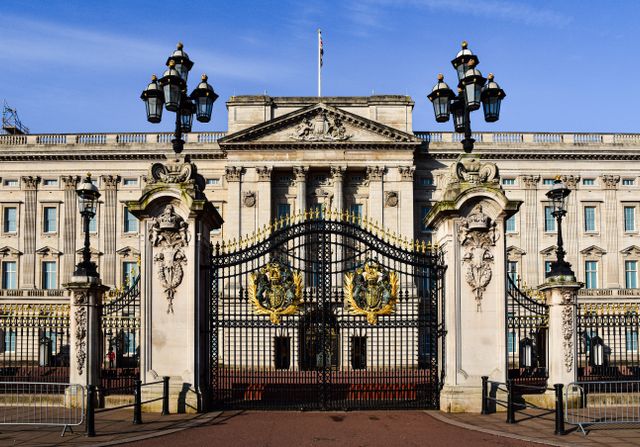
Buckingham Palace has served as the administrative headquarters of the British monarch since Queen Victoria moved there in 1837. Today it remains a working royal palace where official receptions, diplomatic meetings and state occasions take place throughout the year.
Although many visitors simply photograph the famous balcony and Victoria Memorial, the palace offers considerably more for those visiting during the summer opening period. Selected State Rooms become accessible, allowing visitors to admire grand staircases, priceless artworks from the Royal Collection and lavish ceremonial rooms used during official events.
The walk itself forms part of the experience. Leaving Horse Guards Parade through Horse Guards Arch places you directly onto The Mall, London’s famous ceremonial avenue. During major events such as Trooping the Colour, royal weddings and state visits, this broad boulevard becomes one of the world’s most recognisable ceremonial routes.
Experienced London guides often recommend arriving early in the morning if photography is your priority. The softer light, smaller crowds and quieter atmosphere make it much easier to appreciate the architecture and capture uninterrupted photographs.
Visitor feedback consistently highlights how impressive the palace appears in person compared with television coverage. Many first-time visitors are surprised by the scale of the surrounding gardens, memorials and ceremonial spaces rather than the palace building alone.
Why visit after Horse Guards Parade?
- One of London’s most iconic royal landmarks.
- Beautiful walking route through St James’s Park.
- Excellent photography opportunities.
- Historic ceremonial setting connected directly with Horse Guards Parade.
2. St James’s Park
Walking time: 2-3 minutes
Many London parks provide welcome green space, but St James’s Park offers something rather different. It combines formal royal landscaping with remarkable wildlife while sitting between Buckingham Palace, Horse Guards Parade and Whitehall.
Originally created by Henry VIII in the sixteenth century, the park has evolved into one of the capital’s most attractive public spaces. Its lake, ornamental bridges and colourful flower displays create a peaceful contrast to the surrounding government buildings and busy roads.
One of the park’s best-known residents is its colony of pelicans. These birds have lived here for generations after being presented as a diplomatic gift in the seventeenth century. Watching the daily pelican feeding has become a surprisingly popular attraction in its own right.
The Blue Bridge provides one of London’s classic panoramic viewpoints. Looking west, visitors enjoy an uninterrupted view towards Buckingham Palace, while turning east reveals the London Eye rising above the trees. Professional photographers frequently recommend this location because it combines royal landmarks with London’s modern skyline.
Families particularly appreciate the wide pathways, shaded seating areas and frequent opportunities to pause between attractions. During warmer months, the park becomes an ideal location for picnics or simply relaxing after exploring Westminster.
Visitors often mention that they expected little more than a city park but instead found one of London’s quietest and most attractive green spaces. The combination of wildlife, historic monuments and royal surroundings makes it feel very different from many urban parks elsewhere in Europe.
Highlights include:
- The famous Blue Bridge viewpoints.
- Resident pelicans and waterfowl.
- Colourful seasonal flower displays.
- Excellent views towards Buckingham Palace.
- A peaceful break from central London’s busiest streets.
3. Westminster Abbey
Walking time: Approximately 12-15 minutes
Few buildings anywhere in Britain carry as much historical importance as Westminster Abbey. For almost one thousand years it has hosted coronations, royal weddings, state funerals and countless national ceremonies.
Every British monarch since William the Conqueror has been crowned here, creating an extraordinary sense of continuity stretching back nearly a millennium. Walking through its vast Gothic interior reveals remarkable craftsmanship alongside monuments dedicated to monarchs, scientists, writers and military leaders.
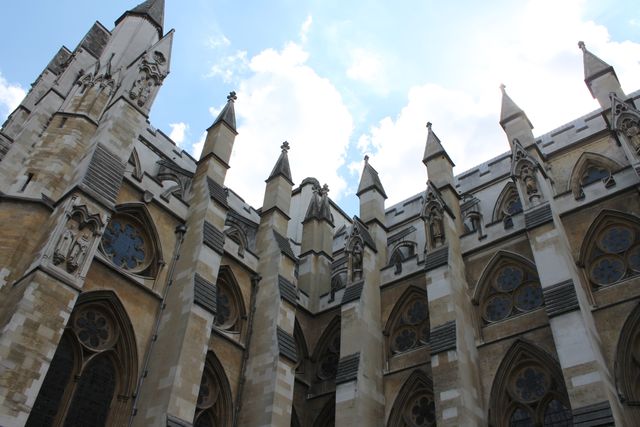
Poets’ Corner remains one of the Abbey’s best-loved sections, commemorating literary figures including Charles Dickens, Geoffrey Chaucer and William Shakespeare. Elsewhere, visitors discover memorials to Isaac Newton, Charles Darwin and numerous prime ministers.
Experts generally recommend allowing at least two hours for the Abbey rather than trying to rush through. Audio guides provide valuable historical context, helping visitors understand why different chapels, tombs and monuments played significant roles in British history.
Visitors consistently praise the atmosphere inside the Abbey. While its architecture is undeniably impressive, many reviews focus on the feeling of standing inside a building where so many defining moments in British history actually occurred.
Those interested in ceremonial traditions often find that visiting Westminster Abbey after Horse Guards Parade creates a deeper appreciation of Britain’s royal pageantry. The military traditions displayed outside Horse Guards continue inside the Abbey through memorials, banners and centuries of royal ceremonial history.
Reasons to include Westminster Abbey:
- UNESCO World Heritage Site.
- Nearly 1,000 years of royal history.
- Coronation Church of British monarchs.
- Outstanding Gothic architecture.
- Exceptional collection of historic monuments.
4. Churchill War Rooms
Walking time: Around 4 minutes
Just a short stroll from Horse Guards Parade lies one of London’s most fascinating museums. Hidden beneath government buildings, the Churchill War Rooms preserve the underground headquarters where Winston Churchill and his advisers directed Britain’s war effort during the Second World War.
Unlike many museums that recreate historical settings, these rooms remain remarkably authentic. Visitors walk through original corridors, communications rooms, map rooms and private offices that remained operational throughout the Blitz and the later years of the conflict.
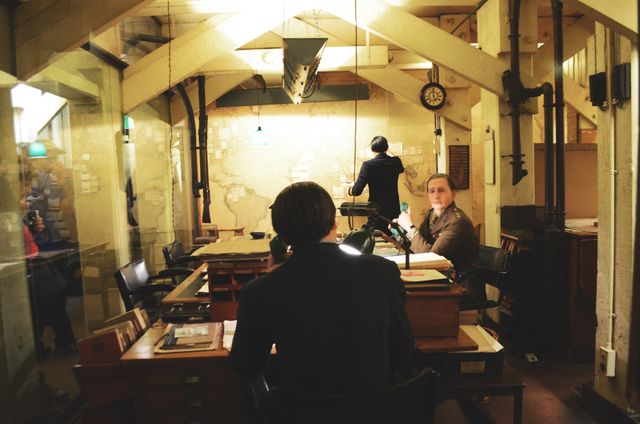
The Cabinet War Rooms reveal how government officials worked beneath London while bombs fell overhead. Original telephones, paperwork, maps and equipment remain in place, creating an immersive experience that feels closer to entering a preserved time capsule than a conventional museum.
Military historians frequently regard the Churchill War Rooms as one of Britain’s finest examples of twentieth-century historical preservation because so much of the original working environment survived intact after the war.
Visitor reviews regularly praise the detailed audio guide, which explains not only Churchill’s leadership but also the lives of the hundreds of staff who worked underground for extended periods. Many guests comment that they spent significantly longer than expected because every room contains fascinating details.
For visitors interested in military history, combining the Household Cavalry Museum with the Churchill War Rooms provides an engaging journey through Britain’s armed forces across very different periods of history.
Visitor highlights:
- Original underground wartime headquarters.
- Outstanding interactive exhibitions.
- Excellent audio guide.
- Suitable for history enthusiasts and families alike.
5. The Cenotaph and Whitehall
Walking time: Less than 3 minutes
Immediately outside Horse Guards Parade lies Whitehall, one of Britain’s most important ceremonial and governmental streets. While visitors naturally notice the impressive government buildings, one monument quietly commands enormous national significance: the Cenotaph.
Designed by Sir Edwin Lutyens and unveiled in 1920, the Cenotaph serves as the United Kingdom’s principal national war memorial. Every November it becomes the focal point of the National Service of Remembrance, attended by members of the Royal Family, senior politicians, military leaders and veterans.
Unlike many elaborate war memorials found throughout Europe, the Cenotaph’s simple design deliberately avoids religious symbolism or military triumph. Instead, its restrained appearance reflects remembrance, sacrifice and national unity.
Walking along Whitehall also provides an opportunity to appreciate several historic government buildings that have shaped British political history. Horse Guards, the Ministry of Defence and numerous departmental offices line this broad avenue, creating a unique combination of military tradition and modern government.
Many visitors are surprised by how much ceremonial activity still takes place here. Depending on the day, you may encounter mounted Household Cavalry patrols, official military vehicles, state processions or rehearsals connected with upcoming national events.
Experienced London guides often encourage visitors not simply to photograph the Cenotaph before moving on, but to spend a few minutes reading the inscriptions and observing the atmosphere. The memorial remains an active place of remembrance rather than simply another historic monument.
Don’t miss:
- The United Kingdom’s national war memorial.
- Historic government architecture.
- Excellent views towards Parliament.
- Regular ceremonial military activity.
- One of London’s most historically significant streets.
6. The National Gallery
Walking time: Approximately 10 minutes
Standing proudly on the northern side of Trafalgar Square, the National Gallery houses one of the world’s finest collections of European paintings. Even visitors with only a casual interest in art are often surprised by the number of instantly recognisable masterpieces displayed throughout its galleries.
The collection spans more than 700 years and includes works by Leonardo da Vinci, Van Gogh, Monet, Rembrandt, Turner, Botticelli, Rubens and many other celebrated artists. Unlike many international museums, permanent admission is free, making it one of London’s outstanding cultural attractions.
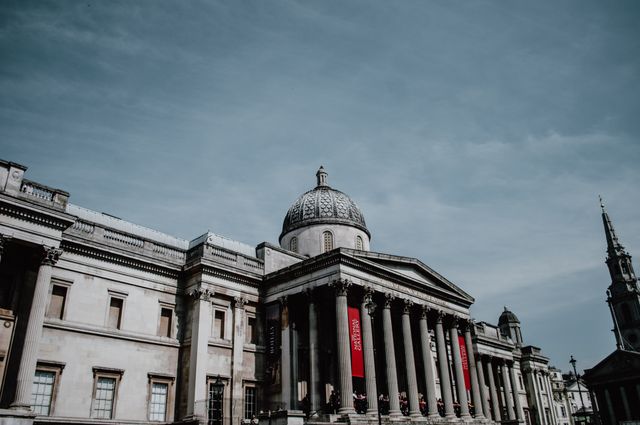
Many experienced visitors recommend focusing on one or two galleries rather than attempting to see everything in a single visit. The collection is extensive enough to occupy several hours, and trying to rush through often means missing some of its greatest treasures.
The Sainsbury Wing, together with the main galleries, allows visitors to trace the development of European painting from the medieval period through to Impressionism. Information panels are written in an accessible style, making the museum enjoyable whether you are an art enthusiast or simply curious.
Visitor feedback consistently praises the calm atmosphere despite the museum’s popularity. Many people comment that it offers a welcome contrast to the busy streets outside, allowing time to slow down and appreciate works that have shaped European art history.
If you are already exploring Westminster and Whitehall, the National Gallery fits naturally into the route without requiring additional transport.
Why it deserves a place on your itinerary:
- World-famous masterpieces.
- Free permanent admission.
- Excellent café and gift shop.
- Ideal rainy-day attraction.
- Suitable for visitors of all ages.
7. Trafalgar Square
Walking time: Around 8 minutes
Few public spaces are as instantly recognisable as Trafalgar Square. Dominated by Nelson’s Column and watched over by its famous bronze lions, the square has been at the heart of London’s public life since the nineteenth century.
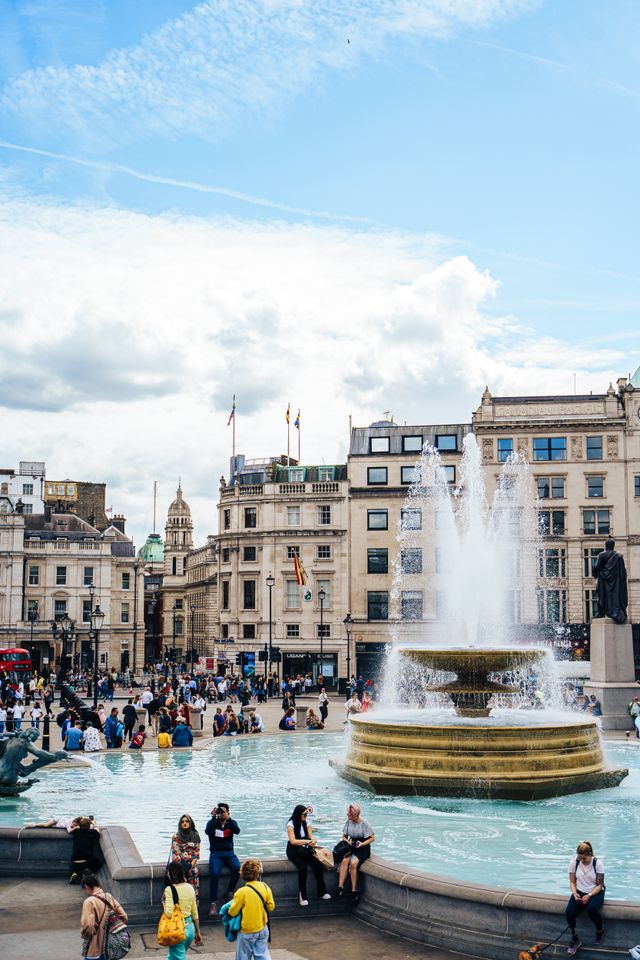
Designed by Sir Charles Barry, the square commemorates Britain’s naval victory at the Battle of Trafalgar in 1805. Today it serves many purposes, hosting cultural celebrations, seasonal events, political demonstrations and public gatherings throughout the year.
Visitors often enjoy simply sitting beside the fountains and watching the constant flow of people. Street performers, musicians and artists frequently add to the lively atmosphere without overwhelming the historic surroundings.
The square also acts as an excellent orientation point. From here, Whitehall stretches south towards Parliament, while The Strand leads east and Pall Mall heads west towards St James’s.
One practical advantage is the concentration of nearby attractions. Within a few minutes’ walk you can reach the National Gallery, St Martin-in-the-Fields, Charing Cross and numerous cafés, making it an ideal place to pause before continuing your sightseeing.
Reviews regularly describe Trafalgar Square as one of London’s best people-watching locations. Visitors appreciate that there is always something happening, whether that is a cultural festival, live performance or simply the everyday rhythm of central London.
Highlights include:
- Nelson’s Column.
- The famous bronze lions.
- Historic fountains.
- Regular public events.
- Excellent access to nearby attractions.
8. St Martin-in-the-Fields
Walking time: Approximately 9 minutes
Overlooking the north-east corner of Trafalgar Square, St Martin-in-the-Fields is one of London’s most elegant churches. Although many visitors admire its distinctive classical architecture from outside, the interior and crypt reward a closer look.
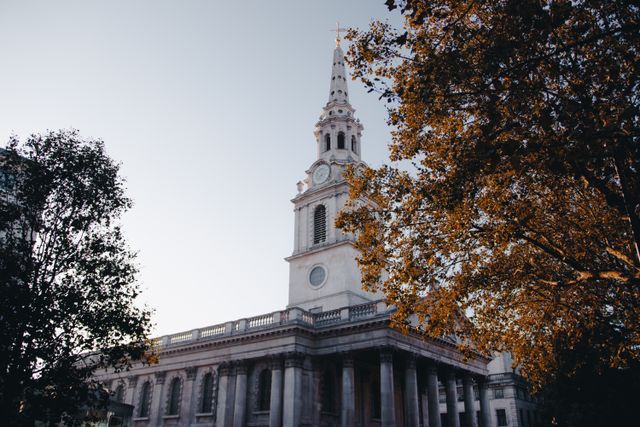
The present church dates largely from the eighteenth century and became one of Britain’s finest examples of Georgian ecclesiastical architecture. Its graceful portico and tall spire have influenced church design around the world, particularly in North America.
Inside, visitors discover a bright, welcoming space that continues to host regular services alongside an internationally respected programme of classical music concerts.
Below ground, the historic crypt has been transformed into an atmospheric café and exhibition space. Dining beneath centuries-old brick vaults creates an experience unlike many traditional cafés in central London.
The church is also known for its charitable work supporting vulnerable people in London, adding a modern social role to its long religious history.
Visitor reviews frequently mention the lunchtime concerts, describing them as exceptional value and an enjoyable opportunity to experience high-quality live music in a remarkable setting.
Reasons to visit:
- Beautiful Georgian architecture.
- Excellent crypt café.
- Regular classical music concerts.
- Peaceful atmosphere in the centre of London.
9. The Banqueting House
Walking time: Less than 2 minutes
One of the easiest attractions to overlook is also one of Whitehall’s most historically important buildings. Situated only a short walk from Horse Guards Parade, the Banqueting House is the sole surviving part of the enormous Palace of Whitehall that once rivalled the greatest royal palaces in Europe.
Completed in 1622 and designed by the celebrated architect Inigo Jones, the building introduced classical Renaissance architecture to England on an unprecedented scale.
Its greatest treasure lies overhead. The magnificent ceiling, painted by Sir Peter Paul Rubens, celebrates the reign of James I through a series of dramatic allegorical scenes. Looking upward from the main hall remains one of London’s most memorable interior experiences.
The building is also forever associated with one of Britain’s defining historical events. In January 1649, King Charles I stepped through a specially created opening onto a scaffold outside the Banqueting House, where he was executed following the English Civil War.
Knowledgeable guides often recommend combining a visit with nearby Horse Guards because together they tell the story of how royal power, military authority and government evolved over several centuries.
Visitors regularly comment that the Banqueting House receives far fewer crowds than neighbouring attractions despite offering one of London’s finest historic interiors.
Reasons not to miss it:
- Rubens’ spectacular ceiling.
- Birthplace of classical architecture in England.
- Key site in British constitutional history.
- Usually quieter than nearby attractions.
10. Westminster Bridge and the River Thames
Walking time: Around 12-15 minutes
A walk to Westminster Bridge rewards visitors with one of London’s most iconic panoramic views. Looking east, the River Thames curves through the city, while to the west the skyline opens towards Lambeth and Chelsea.
The bridge itself has linked both sides of the Thames since the eighteenth century, although the present structure dates from the Victorian era. Its distinctive green colour was chosen to complement the seating inside the House of Commons, located immediately beside the Palace of Westminster.
From the centre of the bridge, visitors can enjoy uninterrupted views of Big Ben, the Houses of Parliament, the London Eye and passing river traffic. Early morning and late afternoon generally provide the best lighting conditions for photography.
The riverside promenade also offers numerous opportunities to continue exploring. River cruises depart from nearby Westminster Pier, while the South Bank features theatres, restaurants and cultural attractions within easy walking distance.
Visitor feedback frequently highlights this viewpoint as one of the best places to appreciate London’s mixture of historic and modern architecture. Even repeat visitors often return here simply to enjoy the changing atmosphere created by the river, weather and city skyline.
Highlights:
- Outstanding photography location.
- Views of Big Ben and Parliament.
- River cruises from Westminster Pier.
- Easy access to the South Bank.
Suggested Walking Route
If you are planning to spend a full day exploring the area, an efficient route helps minimise backtracking while allowing time to enjoy each attraction properly.
- Begin at Horse Guards Parade.
- Walk through St James’s Park to Buckingham Palace.
- Return via The Mall to Whitehall.
- Visit the Banqueting House.
- Continue to the Churchill War Rooms.
- Walk to Westminster Abbey.
- Cross towards Westminster Bridge for river views.
- Return along Whitehall to Trafalgar Square.
- Visit the National Gallery.
- Finish at St Martin-in-the-Fields before enjoying dinner around Covent Garden or Charing Cross.
This route covers many of London’s best-known landmarks while remaining comfortably walkable for most visitors.
Expert Tips for Exploring the Area
- Arrive before 10am if you want quieter streets and better photographs.
- Wear comfortable footwear. Although distances are short, you will spend much of the day on foot.
- Allow extra time if you intend to enter museums or Westminster Abbey, as security queues can develop during busy periods.
- Carry a refillable water bottle during warmer months, particularly if combining several attractions.
- Weekdays generally provide a calmer experience than weekends during peak tourist season.
- If watching the King’s Life Guard, arrive early to secure a good viewing position before continuing your walk.
Finally
Few cities can match the concentration of historic landmarks found around Horse Guards Parade. Within just fifteen minutes on foot, visitors can experience royal palaces, military history, world-class museums, magnificent churches, peaceful parks and some of Britain’s most significant ceremonial locations.
Rather than treating Horse Guards Parade as a brief stop between attractions, it is worth viewing it as the ideal starting point for discovering Westminster. The surrounding neighbourhood reveals how Britain’s monarchy, government, military and cultural institutions have developed side by side over hundreds of years.
Whether you have half a day or a full weekend in London, these nearby attractions allow you to experience the very best of the capital without spending hours travelling across the city. Slow down, explore on foot and you’ll discover that many of London’s finest experiences are only a few minutes apart.
Frequently Asked Questions
1. Can you visit all 10 attractions in one day?
Yes, although whether you can enter every attraction depends on how much time you spend inside each one. Simply walking between the landmarks and viewing them externally can comfortably be achieved in a full day. If you intend to tour museums such as the Churchill War Rooms or spend several hours in Westminster Abbey or the National Gallery, it is better to spread your sightseeing over two days.
2. Which attraction is closest to Horse Guards Parade?
The Banqueting House and the Churchill War Rooms are both only a few minutes’ walk away, while St James’s Park begins almost immediately beside Horse Guards Parade. These are ideal choices if you have limited time before continuing your London itinerary.
3. Are all of these attractions within a genuine 15-minute walk?
Yes. Every attraction featured in this guide can be reached on foot from Horse Guards Parade in approximately 15 minutes or less at an average walking pace. The times quoted allow for normal pedestrian crossings and city pavements rather than rushing.
4. Which attraction offers the best views for photographs?
For panoramic city views, Westminster Bridge is difficult to beat, with Big Ben, the Houses of Parliament and the River Thames all visible from the centre of the bridge. St James’s Park’s Blue Bridge is another favourite, offering beautiful views towards Buckingham Palace and the London Eye.
5. Which nearby attraction is best for families?
St James’s Park is often the most popular with families thanks to its open spaces, wildlife and famous pelicans. Many families also enjoy combining the park with Trafalgar Square and the National Gallery, where admission to the permanent collection is free.
6. What is the best route for seeing these attractions without backtracking?
A practical route starts at Horse Guards Parade before visiting St James’s Park and Buckingham Palace, returning via Whitehall to the Churchill War Rooms and Westminster Abbey. Continue to Westminster Bridge before heading north to Trafalgar Square, the National Gallery and St Martin-in-the-Fields, finishing at the Banqueting House if you have not already visited.
7. Which attractions are free to visit?
Horse Guards Parade, St James’s Park, Trafalgar Square, Whitehall, the Cenotaph and Westminster Bridge can all be enjoyed free of charge. The National Gallery also offers free admission to its permanent collection, while attractions such as Westminster Abbey, the Churchill War Rooms and the Banqueting House charge an admission fee.
8. Which attraction should history enthusiasts prioritise?
If you have time for only one indoor attraction, the Churchill War Rooms offer an outstanding insight into Britain’s Second World War history. Those interested in royal history often prefer Westminster Abbey or the Banqueting House, while military enthusiasts may appreciate combining these with Horse Guards Parade and the Household Cavalry Museum.
9. When is the quietest time to explore these attractions?
Early weekday mornings generally provide the best experience, particularly outside school holidays. Arriving before 10am usually means quieter streets, shorter queues at popular attractions and better opportunities for photography.
10. Is it worth exploring the area on foot rather than using the Underground?
Definitely. One of Westminster’s greatest advantages is how closely together its major attractions are. Walking between them allows you to discover historic streets, memorials, government buildings and hidden viewpoints that would be missed by travelling underground or by taxi. For many visitors, the walks between the attractions become one of the highlights of the day.