Household Cavalry

Horse Guards Parade London Information

A clear visitor guide to Horse Guards Parade in London, including what to see, how to get there, and how to plan a visit with the Household Cavalry Museum.

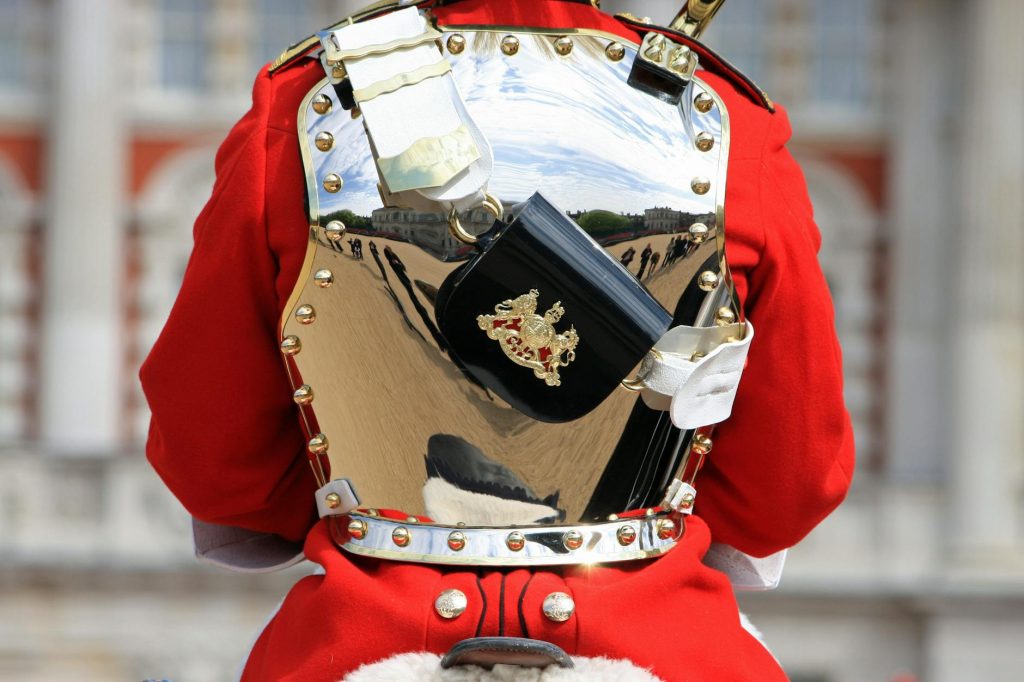
Horse Guards Parade is one of the most historic and recognisable locations in London. Situated on Whitehall between Trafalgar Square and Buckingham Palace, it is the ceremonial home of the Household Cavalry and the setting for many of Britain’s most important state occasions.
Horse Guards Parade London Information

This guide explains what Horse Guards Parade is, what visitors can see there, and how to include it as part of a visit to the Household Cavalry Museum.

For ticket information and museum planning, start here: Purchase Household Cavalry Museum Tickets.

What is Horse Guards Parade?

Horse Guards Parade is a large ceremonial parade ground in central London. For centuries it has been used for military reviews, royal events, and daily ceremonial duties carried out by the Household Cavalry.

Today it remains an active working location where mounted soldiers guard the entrance to Horse Guards, and where the Household Cavalry Changing of the Guard takes place.

What can visitors see at Horse Guards?

Even without entering the museum, Horse Guards Parade offers several memorable experiences:

  • Mounted sentries on duty in full ceremonial uniform
  • The historic Horse Guards building and archway
  • The daily Household Cavalry Changing of the Guard
  • Views across St James’s Park and towards Buckingham Palace

If you would like detailed information about ceremony timings and viewpoints, see the full guide to the Household Cavalry Changing of the Guard.

Where is Horse Guards Parade?

Horse Guards Parade is located on Whitehall, directly between Trafalgar Square and the Houses of Parliament. It is one of the most central and accessible locations in London.

Nearby landmarks include:

  • Trafalgar Square and the National Gallery
  • St James’s Park
  • 10 Downing Street
  • Buckingham Palace
  • Westminster Abbey

Practical travel and route planning information is available from Transport for London. For general London visitor guidance, the official city resource at Visit London provides helpful maps and itineraries.

Horse Guards Parade and the Household Cavalry Museum

The Household Cavalry Museum is located directly beside Horse Guards Parade. This makes it easy to combine outdoor sightseeing with an indoor visit that explains what you have seen.

Inside the museum you can:

  • Learn about the history of the Household Cavalry
  • See historic uniforms and ceremonial equipment
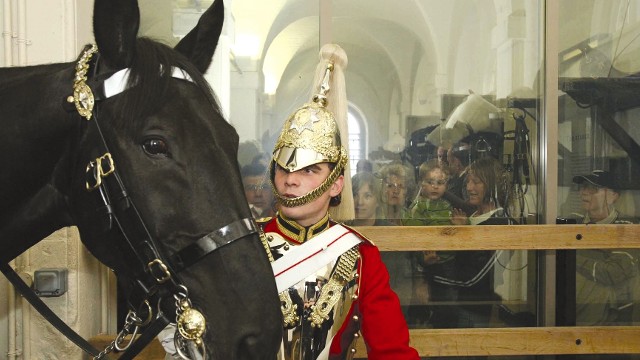
  • View into the working stables where horses are prepared for duty
  • Understand the modern role of the regiment

For more background on the soldiers who serve here, visit Household Cavalry Life Guards and Household Cavalry training and duties.

Best times to visit

Horse Guards Parade can be visited at any time of day, but many people plan their visit around ceremonial activity. Mornings are often the liveliest period, particularly when the Changing of the Guard is scheduled.

Weekends and summer months can be busy, so arriving early gives you more space and better viewing opportunities.

Visitor etiquette and safety

Horse Guards Parade is a working military environment. To enjoy your visit safely and respectfully:

  • Do not attempt to touch or distract the horses
  • Keep clear of soldiers on duty
  • Follow instructions from staff and stewards
  • Be patient and allow space for ceremonies to take place

Understanding what you see

Many of the details visible on Horse Guards Parade – from helmet plumes to breastplates and regimental colours – have specific meanings. Learning a little about these features in advance makes the experience far more rewarding.

A helpful starting point is the guide to Household Cavalry uniforms, which explains how to recognise the different regiments and elements of ceremonial dress.

A short history of Horse Guards

The Horse Guards building and parade ground have been connected with royal and military life since the 17th century. Over time the area developed into the central ceremonial space used today for major national events.

For broader historical context about Britain’s royal and military heritage in London, the Historic Royal Palaces website provides background on related ceremonial sites.

Frequently Asked Questions

Is Horse Guards Parade free to visit?

Yes. Horse Guards Parade is a public open space and can be visited without charge. Only entry to the Household Cavalry Museum requires a ticket.

Can I visit Horse Guards Parade at any time?

Yes. The area is open to the public throughout the day, although access may occasionally be restricted for major state events.

Where is the best place to watch the Changing of the Guard?

The best viewpoints are along the edges of Horse Guards Parade facing the open square. Arriving early helps secure a clear view.

How long should I allow for a visit?

Most visitors spend 30–45 minutes exploring Horse Guards Parade itself, or longer if combining it with the museum and nearby attractions.

Is Horse Guards Parade suitable for children?

Yes. Children usually enjoy seeing the horses and soldiers, but they should be supervised and kept at a respectful distance from working animals.

How do I get to Horse Guards Parade by public transport?

The closest Underground stations are Charing Cross, Embankment, and Westminster. Detailed route options are available from Transport for London.
Continue Reading
Household Cavalry

Household Cavalry Changing of the Guard – Times and Locations

Practical guide to the Household Cavalry Changing of the Guard at Horse Guards Parade in London, including timings, best viewpoints and tips.

The Household Cavalry Changing of the Guard at Horse Guards Parade is one of London’s most impressive daily ceremonies. Mounted soldiers in full ceremonial uniform formally hand over duty, continuing a tradition that has taken place in the heart of the capital for generations.

Household Cavalry Changing of the Guard – Times and Locations

This guide explains what the ceremony involves, where to watch it, and how to combine it with a visit to the Household Cavalry Museum.

For ticket information and planning your day, start with Household Cavalry Museum Entry Ticket.

What is the Household Cavalry Changing of the Guard?

The ceremony is a formal transfer of responsibility between two mounted guard detachments of the Household Cavalry. One group finishes its period of duty at Horse Guards, and a new group takes over. The change is carried out with precise drill, commands, and inspection routines.

Unlike the Changing of the Guard at Buckingham Palace, this ceremony specifically involves the mounted Household Cavalry and takes place on Horse Guards Parade in Whitehall.

To understand how this location fits into London’s ceremonial landscape, see the Horse Guards Parade visitor guide.

When does the ceremony take place?

The Household Cavalry Changing of the Guard normally takes place every day. Exact timings can vary depending on operational requirements and special events, but it is generally held in the late morning.

Arriving early is recommended, particularly in summer months when visitor numbers in central London are high. The ceremony itself lasts only a short time, but watching the preparation and movement of horses adds to the experience.

Where is the best place to watch?

The ceremony happens directly on Horse Guards Parade, next to the Household Cavalry Museum. Good viewing spots include:

  • Along the railings facing the parade ground
  • Near the arches of Horse Guards building
  • Areas that allow a clear side-on view of the mounted formations

Because the event is free and unticketed, space is available on a first-come, first-served basis. Standing a little further back often provides a better overall view than trying to be at the front of the crowd.

What you will see during the ceremony

Visitors typically experience:

  • Mounted soldiers arriving and departing in formation
  • Formal inspection of horses and equipment
  • Precise drill movements and commands
  • The striking ceremonial uniforms of the Life Guards and Blues & Royals

If you would like to recognise uniform details more easily, read the guide to Household Cavalry uniforms before you visit.

Combining the ceremony with a museum visit

The Household Cavalry Museum is located immediately beside Horse Guards Parade, making it easy to see both on the same day. Many visitors choose to:

  • Watch the ceremony first
  • Then enter the museum to learn more about what they have just seen
  • Finish by exploring nearby attractions such as St James’s Park or Buckingham Palace

Inside the museum you can view the working stables, historic exhibits, and displays that explain the modern role of the regiment. Background on those duties is available on the page about Household Cavalry training and duties.

Respectful viewing etiquette

The Changing of the Guard is not a performance but a working military duty. To enjoy it safely and respectfully:

  • Follow instructions from staff and soldiers
  • Do not approach or distract the horses
  • Keep clear of moving formations
  • Avoid using flash photography close to animals

Planning your day in London

Horse Guards Parade is centrally located between Trafalgar Square and Westminster. Practical travel information can be found through Transport for London. For wider ideas on London sightseeing, the official city guide at Visit London offers useful itineraries and attraction suggestions.

For an official overview of the regiment responsible for the ceremony, see the British Army Household Cavalry information page.

Frequently Asked Questions

Is the Household Cavalry Changing of the Guard free to watch?

Yes. The ceremony takes place in a public area on Horse Guards Parade and can be viewed without purchasing a ticket.

What time does the Changing of the Guard happen?

The ceremony normally takes place in the late morning. Exact times can vary, so it is best to arrive early and allow some flexibility in your schedule.

Do I need museum tickets to see the ceremony?

No. Watching the ceremony does not require museum entry. Museum tickets are only needed if you wish to visit the exhibitions and stable viewing area afterwards.

How long does the ceremony last?

The formal change itself is relatively brief, usually around 15 to 20 minutes, though activity on the parade ground begins earlier.

Where is the best viewpoint for photographs?

Positions slightly back from the front railings often provide the clearest view of the whole formation. Side-on views generally work better than standing directly in front of the arches.

Can children enjoy the ceremony?

Yes. The horses, uniforms, and formal movements make it an engaging experience for families, provided children are supervised and kept at a safe distance.

Continue Reading
Household Cavalry

Household Cavalry Training and Duties – Ceremonies to Modern Military Service

Learn how Household Cavalry soldiers and horses are trained, the skills behind ceremonial duties, and the regiment’s modern operational role.

The Household Cavalry is famous for ceremonial duties in London, but behind the polished helmets and mounted parades lies a professional military regiment with demanding modern responsibilities. Every soldier you see on Horse Guards Parade has completed extensive training, both for ceremonial roles and for active service with the British Army.

Household Cavalry Training

This guide explains how Household Cavalry soldiers and horses are trained, what their day-to-day duties involve, and how visitors can see the results of that training during a visit to the museum.

For practical planning information, start with Household Cavalry Museum Tickets.

A regiment with two roles

The Household Cavalry has a unique position within the British Army. It performs highly visible ceremonial duties in central London while also operating as a modern reconnaissance regiment capable of deployment around the world.

Training therefore has to prepare soldiers for two very different environments:

  • Ceremonial service – mounted duties, public events, and royal occasions
  • Operational military service – professional soldiering alongside other British Army units

An official overview of the regiment’s current structure and responsibilities is available on the British Army Household Cavalry page.

Training soldiers for ceremonial duty

Ceremonial service requires far more than simply wearing a historic uniform. Soldiers must master:

  • Precise mounted drill and formation riding
  • Control and care of ceremonial horses
  • Discipline and presentation in highly public settings
  • Understanding of regimental tradition and protocol

Mounted training is rigorous and detailed. Riders learn to guide horses safely through busy London streets, to remain calm in crowds, and to maintain exact positioning during formal ceremonies.

Visitors can see part of this process in action through the museum’s viewing area into the working stables, where horses are prepared for daily duties at Horse Guards.

Training the Household Cavalry horses

The horses used for ceremonial duty are carefully selected and trained over long periods. They must be steady, confident, and comfortable in environments that include traffic, noise, and large crowds.

Key elements of horse training include:

  • Desensitisation to noise and movement
  • Building strength and stamina for long periods on duty
  • Learning precise manoeuvres required for parade work
  • Daily routines that maintain high standards of care

The result is a group of highly trained animals that are as professional in their role as the soldiers who ride them.

Operational military training

Beyond London ceremonies, Household Cavalry soldiers are trained for modern operational roles. The regiment forms part of the British Army’s reconnaissance capability, requiring skills such as:

  • Tactical vehicle operation
  • Navigation and communications
  • Fieldcraft and leadership
  • Working alongside other military units

This dual responsibility – ceremonial excellence and operational readiness – makes Household Cavalry training unusually broad and demanding.

How training connects to what visitors see

Understanding the preparation behind ceremonial duty helps visitors appreciate what they see at Horse Guards and inside the museum. The uniforms, equipment, and traditions on display are part of a living working system, not simply historical artefacts.

To recognise the details of ceremonial dress more clearly, see our guide to Household Cavalry uniforms.

For the best way to watch the results of this training in public, use the Changing of the Guard guide and the Horse Guards Parade visitor guide.

From recruits to professional soldiers

Becoming a member of the Household Cavalry is a long-term process. New recruits must develop both military competence and the specialist skills required for mounted ceremonial service. The blend of tradition and modern soldiering is what gives the regiment its distinctive character.

For wider context on British Army training and career pathways, the British Army careers information provides background on how soldiers are developed and supported.

Planning a visit with training in mind

Seeing the museum and Horse Guards Parade together gives the clearest picture of how training translates into real duties. Many visitors choose to:

  • Explore museum exhibitions first for background
  • Watch activity in the working stables
  • Then view a ceremony or guard change outside

Travel advice for reaching Horse Guards and moving around central London can be found at Transport for London, while broader visitor ideas are available from Visit London.

Note: I came across this article recently in the New York Times about the Geneva Cavalry and found it rather interesting. I feel like a fact finding trip may be happening soon. An acquaintance of mine runs this Swiss Geneva Airport car hire website. Sort me out John. Thanks 🙂

Frequently Asked Questions

Are Household Cavalry soldiers trained as both riders and soldiers?

Yes. Members of the Household Cavalry receive professional military training as British Army soldiers and additional specialist training for mounted ceremonial duties.

How long does it take to train a ceremonial horse?

Training a horse for Household Cavalry duties is a gradual process that can take many months, ensuring the animal is calm, confident, and reliable in busy public environments.

Can visitors see training taking place?

Visitors can often observe elements of daily preparation through the museum’s viewing area into the working stables, where horses are groomed and readied for duty.

Do the same soldiers perform ceremonies and operational roles?

Yes. Soldiers who appear on Horse Guards also serve in operational roles when required, reflecting the regiment’s dual responsibilities.

Is riding experience required to join the Household Cavalry?

No prior riding experience is required. New recruits are taught the necessary mounted skills as part of their specialist training.

Why is ceremonial training so precise?

Ceremonial duty represents the British Army and the nation to the public and the world, so exact standards of discipline, timing, and presentation are essential.

Continue Reading
Household Cavalry

Household Cavalry Uniforms: Life Guards, Blues & Royals, and What You See at the Museum

Explore Household Cavalry uniforms, from helmets and breastplates to modern ceremonial dress, and what you can see at the museum.

The Household Cavalry is famous worldwide for its distinctive ceremonial uniforms: polished metal breastplates, gleaming helmets, and bold colours that stand out on Horse Guards Parade. These uniforms are not costume. They are working ceremonial dress, worn by serving soldiers carrying out official duties in central London.

Household Cavalry Uniforms

This guide explains what makes Household Cavalry uniforms so recognisable, how the Life Guards and the Blues & Royals differ, and what you can look for during a museum visit or while watching the Changing of the Guard.

If you are planning your day, start with London: Household Cavalry Museum Entry Tickets.

Who wears the uniforms you see in London?

The Household Cavalry is made up of two regiments:

  • The Life Guards
  • The Blues & Royals (Royal Horse Guards and 1st Dragoons)

When you watch mounted duties at Horse Guards, you are seeing serving soldiers in the Household Cavalry, carrying out ceremonial roles as part of the British Army. For the regiment’s official overview, see the British Army Household Cavalry page.

Household Cavalry Blues & Royals Full Dismounted Uniform Set With Peak Cap HCMR
£3,066.69
eBay
WWI K troop, 3rd Cavalry Regt, 3rd CORPS • M1917 “British Contract” Service Coat
£512.93
eBay
Household Cavalry Lifeguards Full Dismounted Uniform Set With Peak Cap - HCMR
£2,556.69
eBay
HOUSEHOLD CAVALRY MENS STATE COAT BRITISH ARMY ISSUE CHEST APPROX 100CM 39"
£550.00
eBay
The Life Guards Household Cavalry Regiment
£4,000.00
eBay
HOUSEHOLD CAVALRY MENS STATE COAT BRITISH ARMY ISSUE CHEST APPROX 44" 112CM
£550.00
eBay
RARE!! Household Cavalry Military Riding Boots. Regent England 1990 MoD Size 11
£669.70
eBay
Span Am War M1902 Officers Summer Undress White Coat • 6th Cavalry Regiment
£892.06
eBay
WWI M1910/1911 Hybrid Spec 1126 Service Coat MG Tr, 10th CAVALRY BUFFALO SOLDIER
£579.84
eBay
19th Century Military Oil Painting Portrait Red Tunic Coat Victorian Officer
£3,500.00
eBay
WW1 Military documents, Joseph Ward collectibles
£515.68
eBay
Large Framed Oil Painting 18th Century Cavalry Scene Signed Armstrong
£850.00
eBay

The purpose of ceremonial uniform

Ceremonial dress is designed to be highly visible, consistent, and meaningful. Uniform details signal regiment identity, rank, and role, while also preserving traditions that have developed over centuries.

In practice, the uniform must also work in real conditions: mounted soldiers ride for extended periods, move through busy public spaces, and take part in formal ceremonies where precision matters.

Key elements of Household Cavalry ceremonial dress

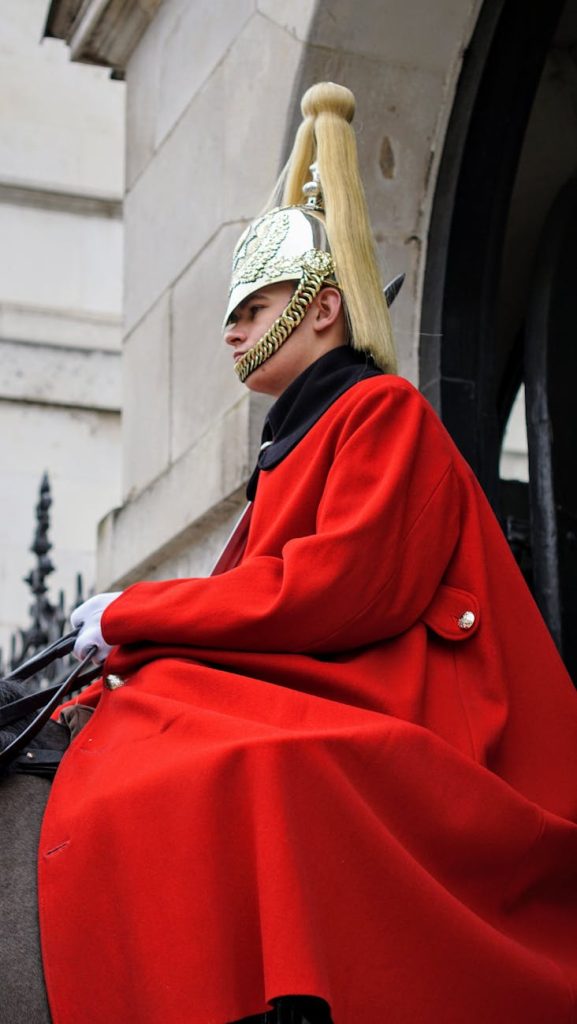
The helmet and plume

The helmet is one of the most recognisable parts of the uniform. It is paired with a plume that helps identify the regiment at a glance. In London, the plume colour is often what visitors notice first, especially during parades and guard changes.

Helmets and their development sit within a wider story of protective and ceremonial headgear in Britain. If you want broader context on historic armour and display traditions, the Royal Armouries provides accessible background on arms and armour history.

The cuirass (breastplate)

The polished metal breastplate, or cuirass, creates the iconic “armoured” look associated with mounted ceremonial duty. Historically, a cuirass offered real protection. Today, it remains a strong symbol of mounted tradition and ceremonial continuity.

Tunics, braiding, and insignia

Uniform tunics and braiding vary by regiment and role. Look for:

  • Regimental identity shown through colour and detailing
  • Rank insignia and specific badges
  • Button arrangements and decorative braiding patterns

Small differences are deliberate. They help keep ceremonial standards consistent while preserving the separate identities of the two regiments within the Household Cavalry.

Boots and riding equipment

Mounted ceremonial uniforms include tall riding boots and equipment designed for control, stability, and presentation. The overall look is formal, but it is also practical for long periods in the saddle.

Life Guards vs Blues & Royals: what’s the difference?

Visitors often want a quick way to tell which regiment they are seeing. While the most obvious visual cues can vary by the specific dress order being worn, the two regiments have consistent identifying features. If you want to understand the regiments in more depth, see Household Cavalry Life Guards.

When you are on Horse Guards Parade, the easiest approach is:

  • Look for the plume colour on the helmet
  • Check the overall colour scheme and detailing on tunics
  • Notice badges and small uniform cues

If you are visiting the museum, displays help explain these distinctions clearly, with context that is hard to pick up from a quick street-side view.

Uniforms you’ll see at the Household Cavalry Museum

The museum is a strong place to understand what you are seeing outdoors, because you can study details at close range and learn the meaning behind them. Visitors typically focus on:

  • Ceremonial mounted uniform associated with Horse Guards duties
  • Historic uniform development and changing styles over time
  • Objects linked to service such as equipment, medals, and regimental items

For a broader look at how ceremony, music, and public events fit together, see Household Cavalry Parade and Band.

Seeing uniforms in action at Horse Guards

If you want to see the uniforms “in context,” Horse Guards Parade is the best place. You will see mounted soldiers carrying out duties in a working setting rather than a staged performance.

Two useful starting points:

To understand the modern training and duties behind what you see in London, visit Household Cavalry training.

Visitor tips for appreciating uniform details

  • Slow down: the most interesting differences are small, and easy to miss if you’re rushing.
  • Look at the full silhouette: helmet, cuirass, tunic, and boots work as a single design.
  • Use the museum first: seeing uniforms up close makes outdoor viewing much more meaningful.
  • Be respectful: these are serving soldiers at work, not performers.

If you’re visiting other nearby heritage sites during your day in London, practical city travel information is available from Transport for London.
Frequently Asked Questions

What uniforms are on display at the Household Cavalry Museum?

The museum focuses on ceremonial uniforms linked to mounted duty at Horse Guards, along with displays that explain how uniforms and equipment have changed over time.

What is the difference between Life Guards and Blues & Royals uniforms?

They are different regiments with distinct identifying features. In practice, visitors often use helmet plume colour and uniform detailing as the quickest way to tell them apart.

Why do Household Cavalry soldiers wear breastplates?

Breastplates (cuirasses) have historic protective roots and remain a key symbol of mounted ceremonial tradition. Today they are part of formal dress used for public duties.

Can I photograph the uniforms in the museum?

Personal photography is often permitted for non-commercial use, but restrictions can apply in certain areas. Check on-site guidance, and avoid flash around sensitive displays.

Is the uniform still used today or is it historical?

Both. The Household Cavalry still wears ceremonial uniform for duties and official events, while the museum also explains historic uniform development and earlier styles.

Where is the best place to see the uniforms being worn?

Horse Guards Parade is the best location to see mounted uniforms in action. Use the Changing of the Guard guide to plan your timing.

Take a look at the video below.

Continue Reading
Household Cavalry

Household Cavalry Parade and Band

Learn about the Household Cavalry parade traditions and band, where to see ceremonies at Horse Guards, and how to plan a museum visit.

The Household Cavalry is closely associated with London’s great state occasions: mounted troops in full ceremonial dress, precision drill on Horse Guards Parade, and military music that signals formality, tradition, and national moments. For many visitors, seeing the parade ground in use and hearing the band is part of what makes central London feel unmistakably “royal.”

Household Cavalry Parade and Band

This page explains what the Household Cavalry parade traditions involve, what the band does, and how to plan a visit that connects museum exhibits with what you may see outside on Horse Guards Parade.

If you are planning your visit, start here: Household Cavalry Museum Entry Tickets.

What “parade” means in the Household Cavalry

In a ceremonial context, “parade” can refer to both a physical place (the parade ground) and a formal military activity. The Household Cavalry carries out ceremonial duties at Horse Guards and in wider royal events, where timings, formations, and presentation are all carefully controlled.

Horse Guards Parade is the public-facing setting where many visitors first encounter the Household Cavalry. It is also used for major ceremonial events that draw national and international attention.

For orientation, history, and what happens where, see the Horse Guards Parade visitor guide.

The Household Cavalry Band in brief

Military music is not decoration. It is a working part of ceremony, used to set rhythm, mark transitions, and signal official moments. The Household Cavalry’s musical tradition includes mounted elements and performances that support state ceremonial life.

In practical terms, the band helps create the soundscape visitors associate with London’s ceremonial calendar: the measured pace, the formal cues, and the sense of occasion.

Where visitors can see Household Cavalry ceremony

If you want to see the Household Cavalry in public ceremonial duty, the key location is Horse Guards Parade on Whitehall. This is also where visitors can watch the Household Cavalry’s Changing of the Guard ceremony.

For timings, what to expect, and the best viewpoints, use the dedicated guide: Household Cavalry Changing of the Guard.

How the museum helps you understand what you’re seeing

The museum provides context that is easy to miss when you only see ceremonies briefly outdoors. Exhibits help explain:

  • Why uniforms look the way they do, including helmet plumes, breastplates, and regimental identity
  • How mounted ceremonial duties fit into the regiment’s wider role
  • How equipment, dress, and tradition have developed over time
  • What a working mounted unit needs behind the scenes

If you want a clear guide to what to look for in ceremonial dress, see Household Cavalry uniforms.

Parade, pageantry, and the modern regiment

It is easy to think of ceremonial duty as separate from modern military service. In reality, the Household Cavalry is both ceremonial and operational. Soldiers who appear in state ceremonial roles are serving members of the British Army.

To understand how the modern regiment functions and trains, read Household Cavalry training and duties. You can also find an official overview via the British Army Household Cavalry page.

Visitor tips for seeing ceremony respectfully

  • Arrive early: popular ceremonies can draw crowds, especially in peak tourist months.
  • Give space: mounted soldiers and horses need room to move safely.
  • Don’t distract working horses: avoid sudden movements close to the animals.
  • Use the museum first if you can: understanding uniforms and roles makes the outdoor experience richer.

If you are navigating central London on the day, travel information is available from Transport for London. For wider visitor planning context, Visit London provides attraction and itinerary guidance.

Related pages

Frequently Asked Questions

Is Horse Guards Parade free to visit?

Yes. Horse Guards Parade is a public space and you can visit without a ticket. Museum tickets are needed to access the Household Cavalry Museum exhibitions and working stable viewing area.

Do I need a ticket to watch the Household Cavalry Changing of the Guard?

No. The ceremony can be watched from public areas around Horse Guards Parade. Use the Changing of the Guard guide to plan timing and viewpoints.

Does the Household Cavalry Band perform every day?

Not usually. Band appearances are linked to ceremonial schedules and specific events. Your best approach is to plan around known ceremonies and keep expectations flexible if you are visiting on a short trip.

What is the best way to understand what I’m seeing during a parade?

Visiting the museum first helps. Exhibits explain uniforms, roles, and the wider ceremonial context, so you can recognise details outdoors more easily.

Can I combine the museum and a ceremony on the same day?

Yes. Many visitors plan the museum visit around ceremony timings at Horse Guards Parade, especially the Changing of the Guard.

Are the soldiers and horses part of a working unit?

Yes. The Household Cavalry is a serving regiment. The ceremonial duties you see in London are carried out by trained soldiers and horses as part of a working military environment.

Continue Reading